
Finding SIM ownership details by mobile number has become very important in Pakistan today. Many people need to know who owns a particular mobile number for different reasons. Sometimes you get calls from unknown numbers and want to know who is calling. Other times, you may need to verify someone’s identity for business or personal reasons. In 2025, getting this information has become much easier with online databases.
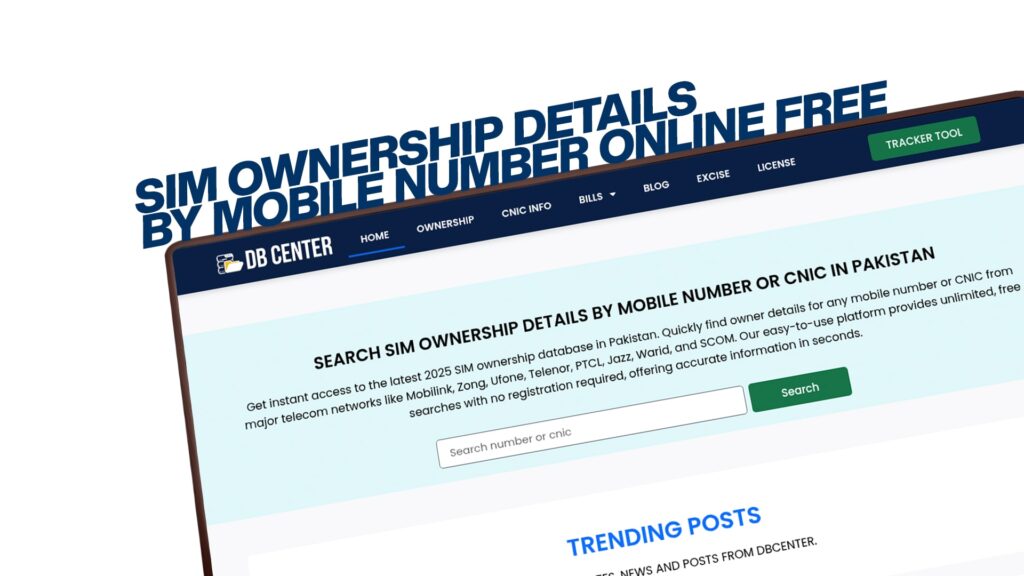
DB Center provides a free and simple way to check SIM ownership details in Pakistan. You can find out who owns any mobile number from all major telecom companies. This includes Jazz, Zong, Ufone, Telenor, PTCL, Warid, Mobilink, and SCOM. The best part is that you can access this information online without paying anything.
What is SIM Ownership Information?
SIM ownership information means the details of the person who registered a mobile number. When someone buys a SIM card in Pakistan, they must provide their personal information to the telecom company. This information includes their name, CNIC number, and address. All this data is stored in a database.
The Pakistan Telecommunication Authority (PTA) requires every telecom operator to keep records of all their customers. This rule helps the government track mobile phone users and prevents illegal activities. It also helps people verify the identity of mobile number owners when needed.
SIM ownership details typically include the owner’s full name, their national identity card number (CNIC), the telecom network they are using, and sometimes their address. This information can be very useful in many situations.
Why Do People Need to Check SIM Ownership Details?
There are many good reasons why someone might want to check SIM ownership details. Understanding these reasons helps you see why this service is so important in Pakistan today.
Security Concerns: Many people receive suspicious calls or messages from unknown numbers. These calls might be scams, fraud attempts, or harassment. By checking the ownership details, you can identify who is calling you and decide whether to block them or report them to authorities.
Business Verification: If you are doing business with someone, you might want to verify their identity. Checking their mobile number ownership helps confirm they are who they say they are. This is especially important for online businesses and e-commerce transactions.
Lost Contact Recovery: Sometimes you find an old number in your phone or on a paper, but you cannot remember who it belongs to. Checking the ownership details helps you identify the person before calling them.
Legal Matters: In legal cases, lawyers and courts sometimes need to identify mobile number owners. This information can be important evidence in various types of cases.
Family Safety: Parents often want to know who their children are talking to on the phone. Checking unknown numbers helps ensure their children are safe and not in contact with harmful people.
Property and Rental Verification: Landlords and property dealers use this service to verify the identity of potential tenants. It helps them ensure they are dealing with genuine people.
How Does DB Center Help You Find SIM Ownership Details?
DB Center has created a simple platform where anyone can search for SIM ownership information. The website maintains an updated database of mobile numbers from all major Pakistani telecom networks. This database is regularly updated to provide the most current information available in 2025.
The platform is designed to be very user-friendly. Even if you are not good with technology, you can easily use this service. You do not need any special skills or knowledge. Just visit the website, enter the mobile number or CNIC you want to check, and get the results instantly.
DB Center supports searches for all major networks in Pakistan. Whether you want to check a Jazz number, Zong, Ufone, Telenor, PTCL landline, Warid, Mobilink, or SCOM, you can find the information on this single platform. This saves you time because you do not need to visit different websites for different networks.
Which Telecom Networks Are Covered?
DB Center provides complete coverage of Pakistani telecom networks. Here is information about each network covered:
Jazz: Jazz is the largest mobile network in Pakistan with millions of users. It was formerly known as Mobilink before merging with Warid. You can check ownership details of all Jazz numbers on the platform.
Zong: Zong is another major network operator in Pakistan, especially popular for its 4G services. The database includes all Zong SIM registrations.
Ufone: Ufone is a widely used network, particularly in certain regions of Pakistan. All Ufone numbers can be searched through the database.
Telenor: Telenor has a large customer base in Pakistan. The platform provides complete access to Telenor SIM ownership records.
PTCL: Pakistan Telecommunication Company Limited provides landline and mobile services. You can check PTCL number ownership as well.
Warid: Although Warid merged with Jazz, many old Warid numbers are still active. The database includes these numbers too.
Mobilink: Mobilink numbers that have not been converted to Jazz are also available in the database.
SCOM: Special Communications Organization serves certain areas, and their numbers are included in the system.
How to Check SIM Ownership by Mobile Number
Checking SIM ownership details through DB Center is very simple. The process takes only a few minutes, and you get instant results. Here is how you can do it step by step:
First, open your web browser on your phone, tablet, or computer. You can use any browser like Chrome, Firefox, Safari, or any other browser you prefer.
Next, visit DB Center by typing the website address in your browser. The homepage is simple and easy to understand.
On the homepage, you will see a search box. This is where you enter the mobile number you want to check. Make sure you type the complete mobile number with the correct format. For example, if it is a Jazz number starting with 0300, type the full number including the zero.
After entering the number, click on the search button. The system will immediately start searching its database for information about that number.
Within seconds, the results will appear on your screen. You will see the owner’s name, their CNIC number, and the network they are using. The information is displayed clearly so you can easily read and understand it.
If you want to check another number, simply clear the search box and enter a new number. You can search as many numbers as you need without any limitations.
How to Check SIM Ownership by CNIC
Sometimes you might have someone’s CNIC number and want to know what mobile numbers are registered under that CNIC. This is also possible through DB Center. The process is similar to searching by mobile number.
Visit the DB Center website and look for the CNIC search option. Enter the 13-digit CNIC number in the search box. Make sure you type all 13 digits correctly without any dashes or spaces.
Click the search button and wait for the results. The system will show you all mobile numbers that are registered under that particular CNIC. This can include numbers from different networks.
This feature is particularly useful when you want to verify how many SIM cards someone has registered under their name. In Pakistan, there is a limit to how many SIM cards one person can register, so this check helps ensure compliance with regulations.
Is It Legal to Check SIM Ownership Details?
Many people wonder whether checking SIM ownership information is legal in Pakistan. The answer is yes, but with some important points to understand.
The information provided by DB Center comes from publicly available databases and records that telecom companies must maintain according to PTA regulations. The service simply makes this information accessible in one convenient place.
However, it is important to use this information responsibly. You should only check ownership details for legitimate purposes like security, verification, or recovering lost contacts. Using this information for illegal activities, harassment, or invasion of privacy is wrong and can have legal consequences.
The PTA allows citizens to verify SIM ownership for their own security and protection. This helps reduce fraud and increases accountability in the telecom sector.
Benefits of Using DB Center
There are many advantages to using DB Center for checking SIM ownership details. Understanding these benefits helps you see why this platform is trusted by so many users in Pakistan.
Free Access: Unlike some services that charge money for this information, DB Center provides free access to the database. You do not need to pay anything or subscribe to any package.
Quick Results: The search process is very fast. You get results within seconds of entering a mobile number or CNIC. This saves you valuable time.
User-Friendly Interface: The website is designed to be simple and easy to use. Even if you are not familiar with technology, you can navigate the site and find the information you need.
Comprehensive Database: The platform covers all major telecom networks in Pakistan. You do not need to visit multiple websites to check numbers from different networks.
Regular Updates: The database is regularly updated to include new registrations and changes. This ensures you get the most current information available.
No Registration Required: You do not need to create an account or register on the website. Simply visit, search, and get your results immediately.
Privacy Protection: The service does not store your search history or personal information. You can search anonymously without worrying about privacy issues.
Mobile Friendly: The website works well on all devices including smartphones, tablets, and computers. You can check SIM details from anywhere at any time.
Common Problems People Face and Solutions
While using any online service, people sometimes face issues. Here are some common problems users might encounter and how to solve them:
Problem: The mobile number shows no results. Solution: Make sure you have entered the complete number correctly with all digits. Check if you have included the starting zero. If the number is very new, it might not be in the database yet. Try again after a few days.
Problem: The CNIC search shows no numbers. Solution: Verify that you have entered all 13 digits of the CNIC correctly. Some CNICs might not have any mobile numbers registered, which is why no results appear.
Problem: The website is loading slowly. Solution: This might be due to your internet connection. Check your connection speed. If many people are using the website at the same time, it might slow down. Try again after a few minutes.
Problem: The information seems outdated. Solution: Contact the support team to report outdated information. The database is updated regularly, but sometimes there might be delays in receiving updates from telecom companies.
Problem: Cannot access the website. Solution: Check if you have typed the correct website address. Try clearing your browser cache and cookies. If the problem continues, try using a different browser or device.
Tips for Using the Service Effectively
To get the best results from DB Center, follow these helpful tips:
Always double-check the number or CNIC you are entering. A single wrong digit will give you incorrect results or no results at all. Take your time to enter the information carefully.
Save or write down the results you get. You might need to refer to this information later, so keeping a record is helpful.
If you are checking multiple numbers, organize them in a list before you start searching. This makes the process more efficient and ensures you do not forget any numbers.
Use the service during off-peak hours if possible. Early morning or late evening searches might be faster because fewer people are using the website.
Remember that the information is meant for verification and security purposes. Always respect people’s privacy and use the information responsibly.
Privacy and Security Considerations
When using any service that provides personal information, it is important to think about privacy and security. Here are some key points to remember:
DB Center displays only basic ownership information that is already registered with telecom companies and PTA. This is not secret or highly sensitive information, but it should still be treated with care.
Never share the ownership details you find with unauthorized people. If you discovered this information for your own security or verification purposes, keep it private.
Be aware that sharing someone else’s personal information without their consent might violate privacy laws. Use the information you obtain only for the purpose you intended.
If you notice that your own mobile number details are available in the database, this is normal. All registered SIM cards in Pakistan are part of the national database maintained by telecom operators under PTA regulations.
The Importance of SIM Registration in Pakistan
Understanding why SIM registration is important helps you appreciate the value of this service. In Pakistan, mandatory SIM registration was introduced to improve security and reduce illegal activities.
Before SIM registration became mandatory, many people used mobile phones for criminal activities because they could not be traced. Anonymous SIM cards were being used for terrorism, kidnapping, extortion, and fraud. This was a serious security problem for the country.
The government and PTA introduced strict rules requiring everyone to register their SIM cards with their original CNIC. This made every mobile user identifiable and accountable. If someone uses a phone for illegal activities, law enforcement can now trace them quickly.
This system also helps ordinary citizens protect themselves. By checking ownership details, people can identify unknown callers and protect themselves from scams and fraud.
How Telecom Companies Maintain These Records
Each telecom company in Pakistan maintains detailed records of all their customers. When you buy a SIM card, you must provide your CNIC and other personal information. The company verifies your CNIC using the NADRA database to confirm your identity.
After verification, your information is stored in the company’s customer database. This includes your name, CNIC, address, and the mobile numbers registered under your name.
All telecom operators must share this information with PTA, which maintains a central database. This ensures that the government can access subscriber information when needed for security purposes.
These records are regularly updated when customers change their information or when numbers are transferred between people. However, some changes might take time to reflect in the public databases.
Protecting Yourself from SIM-Related Fraud
While checking SIM ownership helps you identify others, you should also protect your own SIM cards from fraud. Here are some important tips:
Never register a SIM card for someone else using your CNIC. Some people do this to help friends or family, but if that person uses the SIM for illegal activities, you will be held responsible.
Regularly check how many SIM cards are registered under your CNIC. If you find unknown numbers, contact your telecom operator immediately to block them.
Keep your CNIC safe and do not share it with strangers. Criminals sometimes use stolen CNIC information to register SIM cards illegally.
If you lose your mobile phone or SIM card, block it immediately by calling your operator’s helpline. This prevents others from using your number for fraudulent activities.
Be careful when buying used phones. Make sure the previous owner has properly transferred or deactivated their SIM to avoid confusion about ownership.
Yes, DB Center provides completely free access to check SIM ownership details. You do not need to pay any fee or subscribe to any service. Simply visit the website, enter the mobile number or CNIC you want to check, and get instant results without any charges.
The search process is very quick. After you enter a mobile number or CNIC and click search, results appear within seconds. The entire process usually takes less than a minute, making it convenient when you need information immediately.
Yes, DB Center supports all major Pakistani telecom networks including Jazz, Zong, Ufone, Telenor, PTCL, Warid, Mobilink, and SCOM. You can check ownership details for numbers from any of these operators on the same platform without visiting different websites.
No, you do not need to create any account or register on the website. The service is available immediately without any signup process. Simply visit the platform, perform your search, and get the results instantly without providing your personal information.
If a number shows no results, first verify that you entered the complete number correctly with all digits. Make sure the number includes the starting zero. If the SIM card is very newly registered, it might not be in the database yet. Wait a few days and try again, or contact your telecom operator for verification.
Conclusion
Checking SIM ownership details by mobile number online has become an essential service in Pakistan. With increasing concerns about security, fraud, and privacy, people need reliable ways to verify who owns a particular mobile number.
DB Center provides this service in the simplest way possible. You can check ownership details for any Pakistani mobile number from Jazz, Zong, Ufone, Telenor, PTCL, Warid, Mobilink, or SCOM. The service is completely free, fast, and easy to use.
Whether you need to identify an unknown caller, verify someone’s identity for business, or simply want to know who owns a number, this platform helps you get accurate information quickly. The database is regularly updated to provide the most current details available in 2025.
Remember to use this information responsibly and only for legitimate purposes. While the service makes personal information accessible, it is important to respect people’s privacy and not misuse the data you obtain.
By using DB Center, you can protect yourself from scams, verify important contacts, and stay informed about who you are communicating with through mobile phones. This transparency helps create a safer and more secure telecommunications environment in Pakistan.